When people talk about improving movement, two words often come up: flexibility and
mobility. They are frequently used interchangeably, but they are not the same
thing—and understanding the difference can change the way you approach your Pilates
practice.
What Is Flexibility?
Flexibility refers to the ability of a muscle or group of muscles to lengthen through a
range of motion.
Think about reaching toward your toes. The length available through your hamstrings
contributes to how far you can reach. Someone with very flexible hamstrings may be
able to fold forward easily, while someone with less flexibility may feel resistance much
sooner.
Flexibility is largely about the capacity of the soft tissues to lengthen.
But being flexible does not necessarily mean you can control that range of motion.
And that is where mobility enters the picture.
What Is Mobility?
Mobility is your ability to move a joint actively and with control through its available
range of motion.
It involves more than muscle length. Mobility requires coordination between your joints,
muscles, nervous system, strength, and stability.
For example, you might be able to use your hands to pull your leg toward your chest,
demonstrating flexibility. But can you lift that same leg to a similar height without using
your hands?
That requires active control.
In simple terms:
Flexibility is the range you have. Mobility is how well you can use it.
Why More Flexibility Isn’t Always Better
It can be tempting to think that greater flexibility automatically means better movement.
Not necessarily.
Some people naturally have a large range of motion but lack the strength or control to
stabilize themselves within that range. Others may feel “tight” even though the issue
isn’t simply shortened muscles. Their body may be limiting movement because it does
not feel sufficiently strong or stable in a particular position.
This is one reason stretching alone doesn’t always solve feelings of stiffness.
The body may need strength, coordination, and confidence in the movement—not
simply more range.
Where Pilates Comes In
Pilates provides an ideal environment for developing mobility because the method
doesn’t simply ask, “How far can you move?”
It asks:
Can you control the movement?
Can you maintain alignment while you move?
Can you breathe freely throughout the movement?
Can you move with strength, precision, and efficiency?
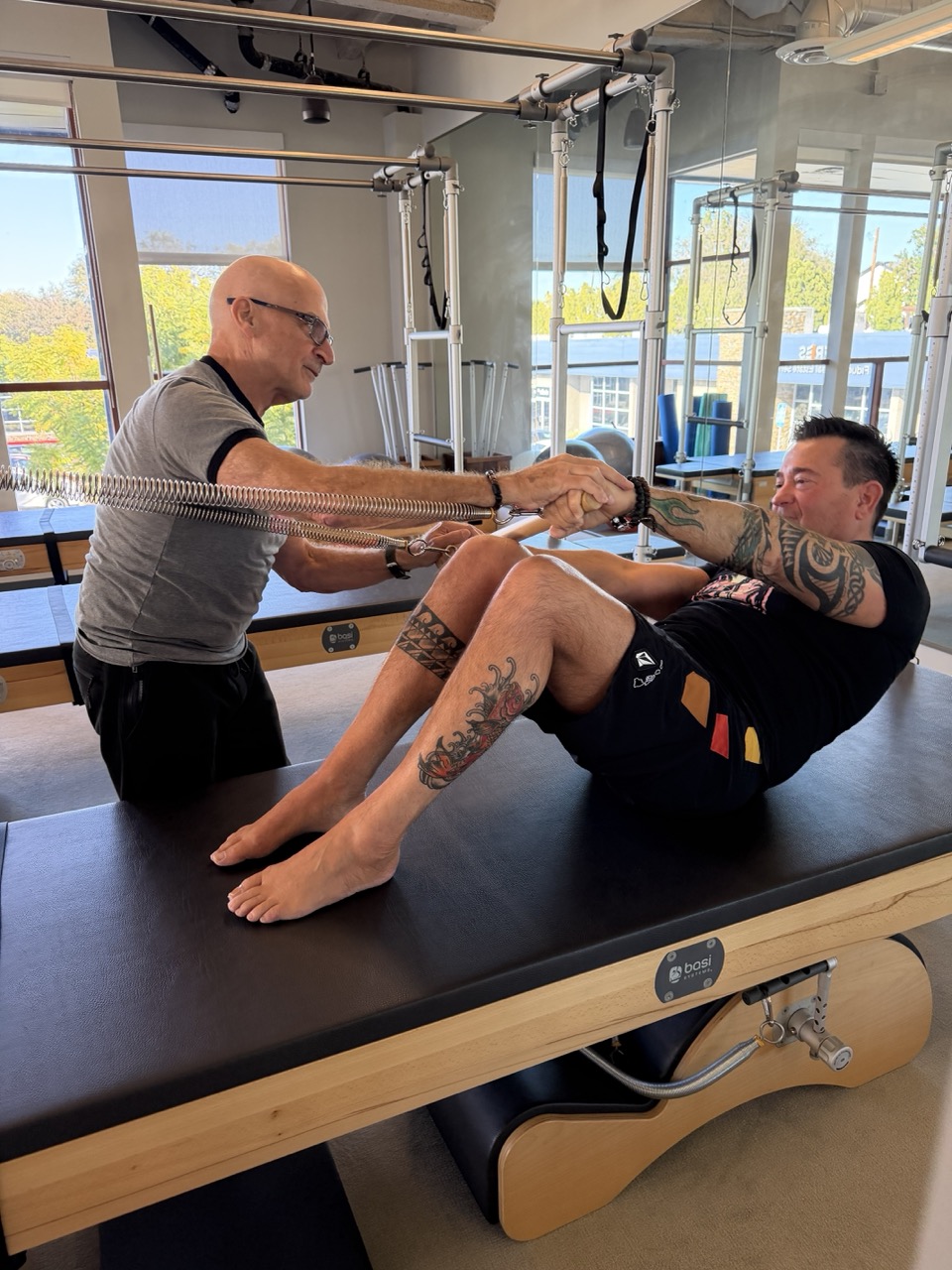
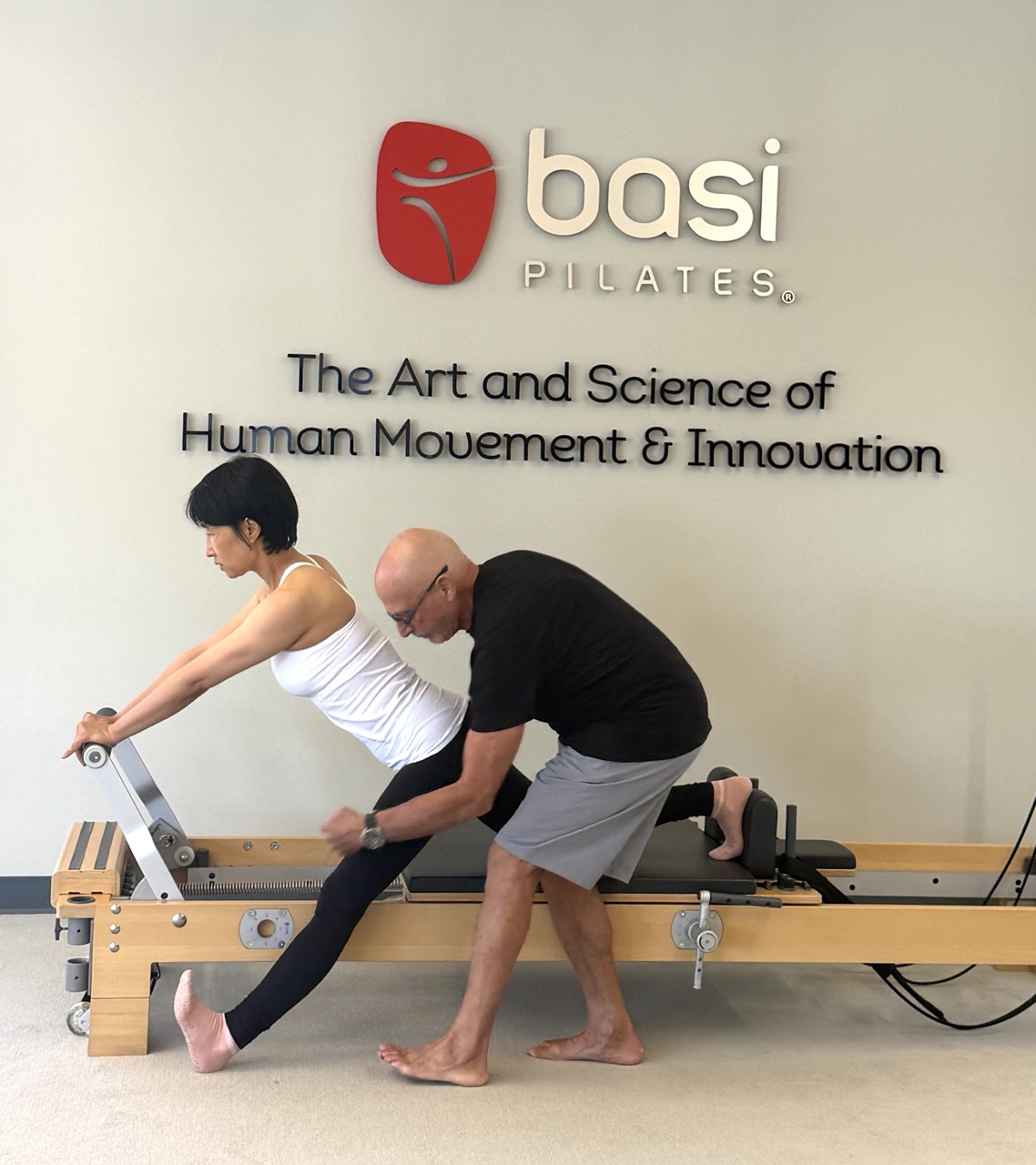
Through exercises that combine strength, stability, coordination, and controlled range of
motion, Pilates helps you develop movement that is both available and usable.
The equipment can also provide assistance when you need support and resistance
when you need greater challenge, allowing your body to explore movement
progressively.
Mobility Matters at Every Age
Maintaining mobility becomes increasingly important as we age.
Everyday activities—getting up from the floor, reaching overhead, turning to look behind
you, climbing stairs, putting on shoes, or getting in and out of a car—require multiple
joints to move together while the body maintains balance and control.
The goal isn’t to achieve extreme ranges of motion.
The goal is to maintain enough strength, mobility, balance, and coordination to
continue doing the things you enjoy.
That makes mobility an important part of healthy aging and lifelong movement.
A Better Question to Ask
Instead of asking:
“How flexible am I?”
Try asking:
“How well can I control the movement I have?”
That shift changes the goal from simply achieving a greater range of motion to
developing a body that can move confidently and efficiently within that range.
Pilates isn’t about forcing your body into positions.
It’s about developing the strength, awareness, and control that allow your body to move
well.
And ultimately, that is what mobility is all about.